• Home
  • About
  • Diet Coach Cafe
  • Books
  • Blog
  • Contact

Posts in Emotional Eating

The Cafe – Emotional Eating

How to stop emotional eating patterns


Recovering from an Emotional Cold

A few years ago, I got a terrible cold. It started when I fell off the sidewalk. But, besides the fact that it hurt a lot, it also pushed me over the edge into an emotional slump …. keep reading


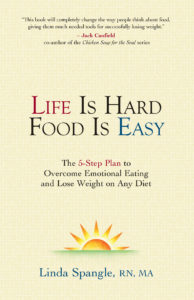
Best book for overcoming emotional eating


Life is Hard, Food is Easy

The 5-Step Plan to Overcome Emotional Eating
and Lose Weight on Any Diet

For more details…click here

Read an excerpt

Available at Amazon, Barnes and Noble and most independent bookstores


Article: How to Figure Out What You’re Feeling

If you refuse to acknowledge your emotions, you have to figure out how to keep them away. So instead of dealing with your feelings, you grab something to eat and try to forget about how you feel. …. keep reading

Worksheet: What Do I Really Feel?

Whenever your emotions are making you want to eat, take a few minutes to complete this exercise before you head for the refrigerator …
Click here for the worksheet

Filed Under: Emotional Eating

How to figure out what you are feeling

Remember how easily your emotions came when you were a child? You rolled around on the floor when you laughed and you never worried about whether you looked silly.

When you fell and skinned your knee, you wailed loudly and cried hot tears. You screamed in anger when your brother threw your favorite doll in the mud.

Most of the time, you never questioned whether these emotions made sense—you just expressed what you felt.

Then you began to grow up. You learned how to tone down your outbursts and stifle your giggles. When you slammed a drawer on your finger, you shook off the pain and swallowed your tears. Instead of hitting your brother, you ignored his teasing and simply walked away.

Some of this was necessary. In the adult world, you can’t always show everything you feel. But sometimes, you end up pushing your emotions away too far.

Staying in control

Maybe you try hard to stay in control and never show what you feel. So when you get angry at your boss, you don’t say anything.

You may not be able to remember the last time you cried. A lot of days, you probably don’t feel anything except stressed or tired, neither of which are emotions.

But not thinking about feelings doesn’t mean you don’t have them. Emotions are normal. If you refuse to acknowledge them, you have to figure out how to keep them away. So instead of dealing with your feelings, you grab something to eat and try to forget about how you feel.

Of course, it’s not practical to eliminate all restraint when showing your feelings. Social etiquette dictates that you can’t cry in the middle of a staff meeting or slam your desk drawers when you get angry. But to stop your patterns of emotional eating, you can’t keep shoving your feelings away.

To stop these eating patterns, you may have to take the lid off your buried emotions. Sometimes exploring your emotions may help you uncover thoughts and experiences you’d forgotten about.

As you rediscover positive feelings like joy, relief, or peace, you will also find the courage to face emotions that feel a little uncomfortable.

Identifying your feelings

When you don’t pay much attention to your feelings, it’s easy to forget how to describe your emotions. Maybe you can only think of a few words such as angry, depressed, or happy.

But within each of these categories lies an enormous range of descriptive words that will capture your feelings more accurately. Being precise makes identifying your emotions even more powerful.

Lots of emotions vary in their intensity, from mild feelings such as “upset” to major responses such as “horrified.” Look at the difference between feeling explosive, furious, or anguished compared to feeling irritated or frustrated.

Emotions have layers

Think of any recent life situations that prompted an emotional response. Perhaps you wish you
could have handled something better in the past. Maybe you are facing an event or discussion you aren’t looking forward to.

Now think about the specific feelings you’re having or did have with this situation. Be as specific as possible about what you feel. As you dig deeper, you may uncover many emotions besides the ones that initially show up.

For example, if you are feeling angry, decide whether you are livid, bitter, or overwhelmed. Maybe your feelings are less intense such as annoyed, irritated, or grouchy.

Or suppose you are depressed over a relationship break-up. In addition to feeling down, tearful, or sad, look for other words that fit. Maybe you also feel lonely, disappointed, or abandoned.

Identifying your emotions brings them out into the open. And once you see the whole picture, you aren’t as likely to reach for food to cover up what you feel.

You don’t even have to write the words down to be able to identify your feelings. You can just think them or even say them to your steering wheel as you drive.

I feel, because…

As you work on identifying your emotions, use the phrase, “I feel, because…” to create a list of your emotions. Start by labeling a specific feeling, then add a few words or a sentence that describes why you have that emotion.

To practice this, take a mental sweep of your present situation and describe your thoughts about life in general. Consider all of the areas that currently affect you, including positive, happy ones as well as issues that are difficult or challenging.

I feel…Because…       

Happy           my three children are wonderful
Frustrated      I can’t seem to get caught up
Stressed         Lots of pressure at work
Worried        My company is doing layoffs
Thrilled         I love my new house
Contented     I have a great husband
Worn out     I’m fighting to get ahead
Bitter           Life isn’t fair

Taking back your power

When you successfully identify your feelings, you find the power to change your response. Giving in to a double cheeseburger might have made Cheryl feel better for the moment, but it wouldn’t have solved the problem.

By postponing the temptation to shove her anger down with food, she was able to process her feelings and recognize better ways to handle them.

Sometimes your original response will shift as you write down your feelings. When you face a situation that makes you want to immediately send out for pizza or shove a bag of chips into your mouth, postpone eating until you’ve figured out what you feel.

In your efforts to stop your emotional eating patterns, you can use the exercise “I feel… because…” to dilute the intensity of your feelings and give yourself time to come up with a better solution.

Filed Under: Emotional Eating

Having a social life when you’re dieting

Suzanne was excited and motivated! This time, she was determined to stick with her weight-loss plan all the way to her goal.

It was a perfect week. When her work friends hosted a Friday night dinner party, she brought her own food, making it easy to stay on her plan.

The party begins

Saturday was a little more challenging. Her friends started with a late afternoon movie (with popcorn) then headed for a boisterous dinner at a local grill known for appetizers and steak fries.

Suzanne tried hard, but cheered on by a couple of drinks and the attention of a cute single guy, she reached for the nachos and joined the party.

On Monday, she was back on track—until the promotion lunch on Tuesday, the birthday cake on Wednesday and girls’ night out on Thursday.

When she stepped on the scale on Saturday morning, she was horrified to see that she hadn’t lost a pound. But she also knew exactly why.

Can I still have a social life?

The fact that you’re on a diet doesn’t prevent the rest of the world from having parties or eating dessert. And unless you stay at home and never leave your bedroom, you’ll still be invited to wine tastings, work parties and family dinners.

When you aren’t clear about the boundaries for your diet or weight-loss plan, it’s too easy to not have any. And that becomes a set up for saying, “I don’t care anymore—I just want to have fun.”

Instead of sacrificing your diet with every social event, you need to come up with a strategy for combining these two areas of your life.

Weight-Loss Plan A

Begin by spelling out exactly what you will do on your ideal program. For example, write down a food plan based the number of points, calories or fat grams you’re aiming for most of the time.

You might even jot down your exercise goals such as a daily twenty-minute walk. All of this is your Weight-Loss Plan A

Weight-Loss Plan B

Now study what’s on your calendar over the next few weeks and note the events that revolve around food.

Do you have an important party or a business trip coming up soon? What about your child’s recital, the monthly book club or poker night?

Instead of “hoping for the best” when you head out the door, create a strategy for each one of these activities. This contingency approach becomes your Weight-Loss Plan B.

Do either Plan A or Plan B

Set a goal that most of the time, you’ll follow Plan A, sticking tightly to your program and moving toward your goals. When your diet feels too rigid for a particular social event or situation, move to Plan B.

For example, to use Plan A at a party, you might arrive late, go home early and swap your usual beverage for a diet drink or club soda.

If necessary, you can switch to Plan B, where you allocate a few more points or calories or maybe choose to eat half a piece of birthday cake. You can also use this approach to handle your favorite restaurants or even specific meals.

There is no Plan C!

Here’s the secret to having a great social life at the same time you’re managing your weight.

When you’re tempted to throw in the towel and eat whatever you feel like, remind yourself there are only two choices—Plan A or Plan B!

That means you don’t have the option of taking the weekend off or excusing yourself from your food plan when you go to an evening party.

Regardless of the temptation to ignore your diet, always try to stick with either Plan A or your contingency approach, Plan B.

Whether you’re starting a new diet or you’ve maintained your weight for a long time, you still need a plan to live by. So keep the odds in your favor by reminding yourself, there is no Plan C.

Filed Under: Emotional Eating

Recovering from an emotional cold

A few years ago, I got a terrible cold. It started when I fell off the sidewalk. I didn’t notice that I was close to the edge, my weak ankle twisted, and I slammed my knee down hard on the cement.

“You’re very lucky,” the doctor said. “No torn ligaments or broken bones. Just a big bruise.”

I was grateful it wasn’t a serious injury. But besides the fact that it hurt a lot, that bruise made me feel old and grumpy. It also pushed me over the fragile edge of my mental stamina and into an emotional slump. I knew that it wasn’t a deep depression, certainly not the kind that requires therapy or drugs. It was just an “emotional cold.”

When this happens to me, I want to eat every-thing. I especially want to eat carrot cake, ice cream and huge chocolate-chip cookies. Of course, these foods only treat the symptoms, not the problem. An hour later, my emotional cold is still there, dragging me down more than ever.

How it gets started

An emotional cold can be brought on by any number of stressful things. Sometimes it’s a struggling relationship, a job layoff, or just being overwhelmed or sick of life at the moment. In some cases, unusual work demands or an ill parent can wear us out.

Emotional challenges tend to be cumulative, just like physical problems. In my case, I’d been through many weeks of subtle stress related to my writing, website development and work concerns.

I’d been struggling with feeling a little moody, discouraged and slightly depressed. And I think all of these things simply kept adding up until I (literally) lost my balance.

Treating an emotional cold

From my own experiences as well as my years of weight-loss counseling, here are some things I’ve learned about healing from an emotional cold.

1. It’s a real cold

Recognize and acknowledge it when you get an emotional cold. Give up the fake happy face and admit that you’re feeling down. When you get an emotional cold, you can’t just talk yourself out of it, ignore it or shake it off. You may have to snuggle under an emotional blanket for a few days, and give yourself time to get better.

2. It’s not your fault

Even if you realize it’s related to stress or not taking time for yourself, don’t blame yourself for getting an emotional cold. They just show up, often as a way to remind us that it’s time to slow down and take better care of ourselves.

And if you eat sweets or junk food in your efforts to cope with your cold, don’t conclude that you’re weak or a failure. You probably just needed some relief from the symptoms while you waited for life to heal you.

3. Rest until you feel better

Do lots of nurturing and self-care while you allow yourself time to recover. If possible, eliminate some of your stress or look for ways to decrease the demands in your life. Take some emotional time off. Call in sick (because you have a “bad cold”) or ask your family to help out more for a few days because of your “illness.”

Once you’ve recovered and you’re feeling better, renew your determination for healthy eating and exercise. Pull out your list of non-food ways to nurture and reward yourself. Then lift the burden off your shoulders, stand up tall, and move back to the center of your healthy road.

Everyone gets an emotional cold now and then. If you learn to recognize the symptoms, then start treating it right away, you’ll perk back up and recover a lot faster. Eventually, you may even learn how to prevent them and avoid experiencing the “last straw” such as falling off a sidewalk.

Filed Under: Emotional Eating

Day 57 – Head hunger “insteads”

Today, you’ll start creating a resource list of things and ideas you can draw on instead of eating. [Read more…]

Filed Under: Emotional Eating Tagged With: Days 51-60

  • « Previous Page
  • 1
  • …
  • 15
  • 16
  • 17
  • 18
  • Next Page »

FREE e-book: 5 Easy Ways to Revive Motivation

(Plus receive my FREE ezine, The Weight Loss Minute)

FREE e-book: 5 Easy Ways to Revive Motivation

Linda Spangle

Meet Linda
Contact


  • Books and Blog

    Linda's Books
    Linda's Blog

Favorite Resources

    • Tracking App
©2026 Weight Loss Joy